
Campaign overview
TrustDice already acquired players through affiliates and organic search, but Meta had not yet developed into a reliable depositor-acquisition channel: that gap was exactly what this campaign was built to close.
Previous paid-social attempts had struggled with both campaign economics and account stability. Two advertising accounts had already been lost before this campaign even began, without ever producing a sustainable flow of first-time depositors.
The challenge here was considerably more complicated than conventional casino acquisition.
TrustDice was not only advertising an online gambling product. Players also needed to understand, trust and complete a cryptocurrency deposit process using Bitcoin or Ethereum: an extra layer of friction most casino campaigns never have to solve for.
The campaign therefore needed to overcome two distinct layers of friction at once:
- convincing users to register with an online casino
- convincing those same users to connect or fund a crypto wallet
The first two weeks focused almost entirely on establishing the account architecture, conversion tracking and compliant user journey required to support meaningful campaign delivery down the line.
Over the following six months, the campaign generated 11,753 registrations and converted 2,684 of them into funded crypto players.

The results
Across the six-month engagement, the campaign generated:
- $312,480 in Meta spend
- 11,753 player registrations
- 2,684 first-time depositors
- $116.42 blended cost per FTD
- 22.8% registration-to-FTD rate
- $95 average first deposit
- $837,000+ in total crypto deposits
- 52.4% second-deposit rate
- 34.7% third-deposit rate
- 41.2% D7 retention
- 24.8% D30 retention
- 2.9 deposits per player within 30 days
- More than $3,500 in daily Meta spend during the scaling phase
CPFTD decreased significantly, from $201.65 during the initial test month down to $110.27 during the scaling phase: a genuine improvement in efficiency, not just a lucky month.
The scale phase alone deployed more than $235,000 while holding acquisition costs steady near that improved level.
The challenge
Running a crypto-casino campaign through Meta effectively combined the difficulties of two restricted categories at once.
Gambling-related restrictions
Advertisements needed to communicate the product clearly without ever using exaggerated financial claims or messaging that framed gambling as a solution to personal financial problems.
The creative, landing experience and offer all needed to stay consistent with one another throughout the entire user journey: any mismatch risked both compliance issues and lost trust.
Crypto and financial-product scrutiny
Players deposited using Bitcoin and Ethereum rather than traditional currency, which is a meaningfully different behaviour to ask of a new user.
Wallet interfaces, crypto terminology and deposit messaging introduced additional layers of platform review and user-trust considerations that a conventional casino funnel simply doesn't have to deal with.
Previous account instability
TrustDice had already lost two advertising accounts before this campaign even started.
Account stability therefore had to be treated as a foundational part of the acquisition system from day one, rather than as an issue to patch up only after campaigns had already started scaling.
Deposit friction
A registration was only ever the beginning of this particular conversion journey, never the end of it.
The user still needed to understand the wallet process, hold or acquire cryptocurrency, and then complete a fully funded transaction: three separate hurdles standing between sign-up and a real depositor.
Limited optimisation data
Confirmed crypto deposits occurred far less frequently than registrations or landing-page events, which is exactly the kind of imbalance that tempts teams into optimising toward the wrong signal.
Optimising toward FTDs would initially give Meta less conversion volume to learn from, but using a weaker event instead would simply train the platform toward users who might never fund their accounts at all.
The campaign needed to solve for stability, education and conversion quality simultaneously, not in sequence.
Why Canada?
Canada offered a large population of digitally mature casino players, combined with significant existing familiarity with cryptocurrency: a rarer combination than it might sound.
However, it remained a genuinely competitive market with relatively expensive Meta inventory. That made inefficient testing costly and raised the stakes on identifying the correct audience and deposit signal early, rather than learning slowly through trial and error.
The campaign needed users who were comfortable with two distinct behaviours at once:
- Playing casino-style games online
- Using a crypto wallet to fund an account
Broad casino interest on its own was never going to be enough.
The campaign needed to locate the specific users who already understood Bitcoin or Ethereum and would not abandon the funnel the moment they encountered a wallet, crypto address or deposit confirmation step.
Canada therefore offered real scaling potential: but only once the campaign could reliably identify this overlap between casino intent and crypto familiarity.
The winning audience was not just interested in casinos. It was comfortable funding one with crypto.
Building the foundation
The first two weeks were spent entirely on establishing the campaign architecture and the complete conversion journey, before any meaningful budget was committed.
The funnel consisted of:
- Meta advertisement
- Educational landing or bridge experience
- Casino registration
- Wallet or deposit flow
- First Bitcoin or Ethereum deposit
- Confirmed deposit event returned to Meta
- Subsequent player deposits and retention
The landing experience explained the crypto deposit process in plain, clear language before users were ever pushed into the wallet flow itself.
This alignment between advertisement, landing page and final deposit experience meaningfully reduced the likelihood that users would abandon the journey right after registering.
The tracking setup then connected confirmed deposit activity directly back to the specific campaigns and creatives responsible for generating it.
The campaign was designed around a funded wallet, not an email registration.
The acquisition system
The campaign was built around four connected components, each one designed to compensate for the specific frictions described above.
1. First-deposit optimisation
Campaigns optimised toward the first confirmed crypto deposit right from the very beginning of the engagement.
Registrations, wallet interactions and page views remained useful as diagnostic events along the way, but none of them were ever used as the primary definition of success.
This choice initially created a slower learning phase, simply because FTDs occurred less frequently than registrations. But every primary conversion signal Meta received represented an actual, funded player: a trade worth making.
2. Server-side deposit feedback
Confirmed deposit events were returned to Meta through server-side tracking and dedicated deposit postbacks.
This allowed the platform to learn precisely which advertisements, audiences and clicks were ultimately responsible for generating funded Bitcoin or Ethereum wallets, rather than just registrations.
3. Depositor-based audience development
The campaign focused specifically on users who demonstrated both casino interest and genuine crypto familiarity.
As confirmed FTD data accumulated over time, funded-depositor audiences were used to build lookalikes and sharpen prospecting further.
This meant new audience models were based on users who had actually deposited, rather than on everyone who had merely visited or registered.
4. Landing-page continuity
The user experience was built to match the promise and tone of the advertisement at every step, with no jarring gaps between the two.
The landing journey explained the crypto deposit process honestly, without ever framing gambling bonuses as investment returns or guaranteed financial outcomes.
Campaign and tracking setup
The measurement structure connected Meta delivery directly with real backend player behaviour, rather than stopping at the ad platform's own reporting.
The system recorded:
- Campaign and creative source
- Player registration
- First crypto deposit
- Deposit currency
- Second and third deposits
- D7 retention
- D30 retention
- Deposits per player within 30 days
Meta received the confirmed first-deposit event it needed for acquisition optimisation, and nothing weaker was substituted in its place.
Backend reporting was then used separately to evaluate whether those depositors actually returned and kept funding their accounts over time.
This distinction mattered because, in theory, a campaign could generate inexpensive initial deposits from players who then never came back.
For TrustDice, the second-deposit, third-deposit and retention metrics were therefore always considered alongside CPFTD, never in isolation from it.
Acquisition performance did not stop at the first deposit.
Creative strategy
The campaign tested creative angles built around the actual crypto-casino experience itself, deliberately avoiding any framing of cryptocurrency as an investment opportunity.
Two concepts produced the strongest results by a clear margin.
"Provably Fair, Instantly Yours"
This angle focused squarely on the transparency of the game mechanics and the speed with which players could access or withdraw their own funds.
Withdrawal-speed proof consistently outperformed the bonus-led concepts tested elsewhere in the campaign.
The message addressed the audience's two biggest concerns head-on:
- Whether the games could actually be trusted
- Whether crypto withdrawals would genuinely be processed
Native screen-capture video
The single strongest format used raw screen recordings of the real product and wallet experience, with no added polish.
Instead of glossy studio production, the creative simply showed:
- Genuine gameplay
- The actual wallet interface
- The real withdrawal journey
- The product operating in real time, unscripted
This created a far more direct and credible demonstration of the experience than any staged alternative could have.
Bonus-stacking concepts
Advertisements built heavily around combining bonuses produced a high CTR, but relatively weak deposit performance once the funnel was followed all the way through.
They also introduced additional messaging and compliance risk that the stronger concepts didn't carry.
These concepts were stopped early, deliberately, rather than being scaled on the strength of engagement metrics alone.


The creative with the strongest promise was not the one offering the biggest bonus. It was the one proving the withdrawal.
Creative refresh and fatigue
Crypto audiences fatigued relatively quickly when shown the same proof or withdrawal demonstration too many times.
Successful concepts were therefore refreshed on a strict cadence of every nine to twelve days.
Refreshes could include:
- Different games
- New opening frames
- Alternative withdrawal demonstrations
- New wallet screens
- Different headlines
- Updated pacing
- Variations of the provably-fair message
The objective was never to replace the complete strategy every ten days: that would have thrown away everything already learned.
It was to preserve the winning message while changing enough of the execution to keep attention high and delivery healthy.
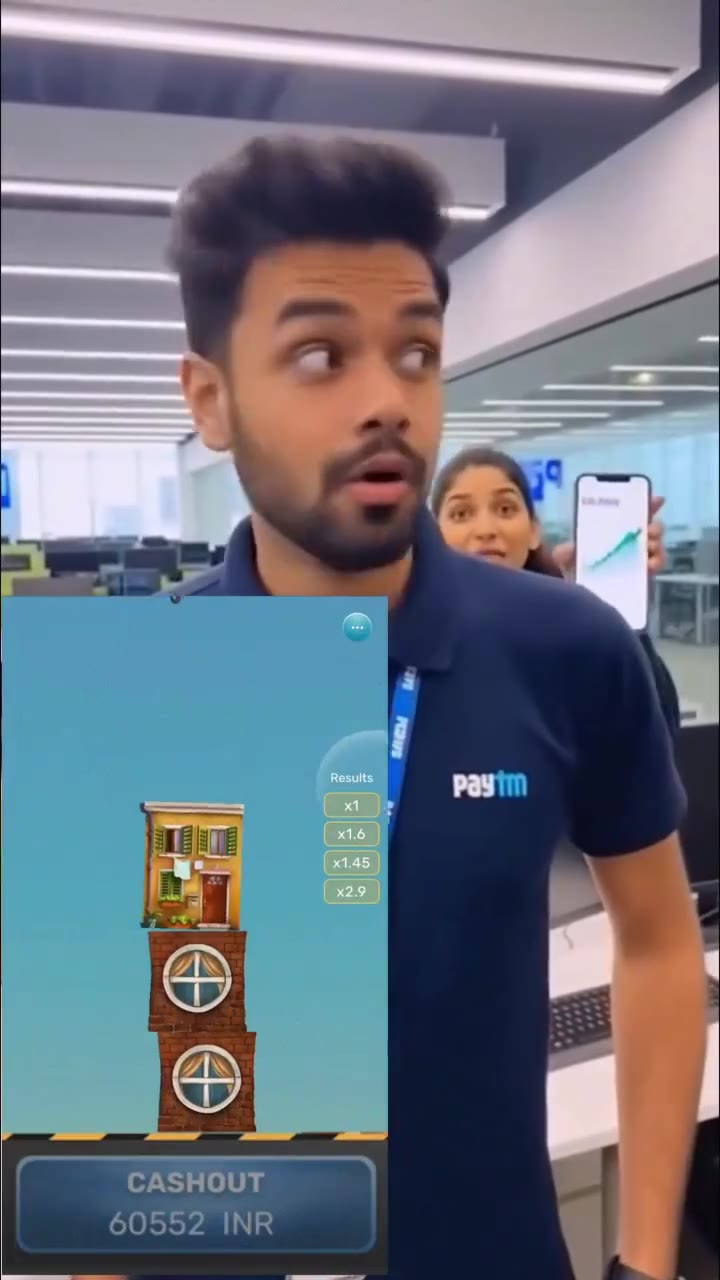
Preserve the message. Refresh the proof.
The six-month progression
The campaign developed through three clearly defined phases.
Month 1: Initial testing
The first month was spent establishing the baseline acquisition cost from a standing start.
CPFTD during this phase came in at $201.65.
The focus throughout was on:
- Account architecture
- Event accuracy
- Deposit optimisation
- Landing-page continuity
- Initial audience validation
- Creative testing
The objective at this stage was simply to confirm whether Meta could generate real, funded wallets at all, before any significant budget was committed further.
Months 2-3: Optimisation
The second phase focused on strengthening the system using the conversion data collected during the test month.
Budget shifted deliberately toward the strongest creative and audience combinations that had emerged.
Bonus-stacking concepts were removed from rotation, native withdrawal-proof creative received a larger share of budget, and confirmed depositor data began actively supporting audience development for the first time.
Months 4-6: Scaling
The final three months made up the scale phase, and this is where the earlier groundwork really paid off.
During this period:
- More than $235,000 was deployed
- Daily spend exceeded $3,500
- Blended CPFTD reached $110.27
- The campaign maintained strong repeat-deposit performance throughout
CPFTD had declined by approximately 45.3% compared with the initial test month, despite spend increasing substantially over the same period: scale and efficiency improved together, not at each other's expense.
The acquisition funnel
The campaign generated 11,753 registrations and 2,684 first-time depositors over the full six months.
| Funnel stage | Result |
|---|---|
| Registrations | 11,753 |
| First-time depositors | 2,684 |
| Registration-to-FTD rate | 22.8% |
| Blended CPFTD | $116.42 |
| Average first deposit | $95 in BTC/ETH |
Approximately one in every 4.4 registered users went on to complete a first crypto deposit: a meaningful conversion rate for a funnel with this much added friction.
Total campaign spend divided by registrations produces an implied cost per registration of approximately $26.59.
The movement from registration to funded wallet was, by a wide margin, the most important stage of the entire funnel. Every improvement made at this single point increased the value of registration volume the campaign was already acquiring.
What happened after the first deposit
The campaign never evaluated player quality using FTD volume alone: that would have missed most of the story.
Second deposits
52.4% of first-time depositors returned to fund their accounts a second time.
Applied to the total FTD base, this represents approximately 1,406 returning depositors.
Third deposits
34.7% of acquired FTDs went on to complete a third deposit.
That represents approximately 931 players who kept coming back.
D7 retention
41.2% of the acquired player base remained active or retained at Day 7.
D30 retention
24.8% remained retained at Day 30, a full month after acquisition.
Deposit frequency
Players completed an average of 2.9 deposits within their first 30 days on the platform.
These metrics together showed that the campaign was never simply purchasing one-time funded wallets. A material share of the acquired players kept depositing and engaging with the product well beyond that first transaction.
The deposit economics
The reported campaign generated more than $837,000 in total Bitcoin and Ethereum deposits from $312,480 in Meta spend.
This produces a minimum deposit-to-spend ratio of approximately 2.68x: and that figure only accounts for what can be conservatively calculated from the published data.
The average first deposit was $95, meaning the 2,684 acquired players initially funded approximately $254,980 in aggregate between them.
The gap between that initial-deposit volume and the total reported deposits reflects just how much repeat deposits contributed to the final number.
| Metric | Result |
|---|---|
| Meta spend | $312,480 |
| Average first deposit | $95 |
| Estimated aggregate first deposits | Approx. $254,980 |
| Total crypto deposits | $837,000+ |
| Deposit-to-spend ratio | At least 2.68x |
| Deposits per player within 30 days | 2.9 |
Deposit volume should never be interpreted automatically as revenue or profit. Final commercial performance also depends heavily on withdrawals, bonuses, payment costs, gaming margins and net gaming revenue.
Repeat funding transformed the economics beyond the first deposit.
The full results
| Metric | Result |
|---|---|
| Campaign period | January-June 2025 |
| Campaign duration | 6 months |
| Meta spend | $312,480 |
| Registrations | 11,753 |
| First-time depositors | 2,684 |
| Blended CPFTD | $116.42 |
| Registration-to-FTD rate | 22.8% |
| Average first deposit | $95 in BTC/ETH |
| Total crypto deposits | $837,000+ |
| Second-deposit rate | 52.4% |
| Third-deposit rate | 34.7% |
| D7 retention | 41.2% |
| D30 retention | 24.8% |
| Deposits per player within 30 days | 2.9 |
| Test-month CPFTD | $201.65 |
| Scale-phase CPFTD | $110.27 |
| Scale-phase spend | $235,000+ |
| Peak daily spend | $3,500+ |
What made the difference
The campaign did not scale because of one isolated creative or a single targeting trick.
It scaled because the complete acquisition system became stronger, deliberately, over the full six months:
- Account architecture was addressed before any meaningful spend went out
- The landing experience prepared users properly for the crypto deposit flow
- Campaigns optimised toward funded wallets from the very beginning
- Deposit events were returned reliably through server-side tracking
- Lookalikes were built from confirmed depositors, not general traffic
- Creative demonstrated the real product and the real withdrawal experience
- Weak bonus-led concepts were stopped early despite strong CTR
- Winning concepts were refreshed on a strict nine-to-twelve-day cycle
- Player quality was measured well beyond the initial deposit
- Scaling followed accumulated depositor data, never got ahead of it
The campaign moved from a $201.65 test-month CPFTD to a $110.27 scale-phase CPFTD, while daily spend simultaneously increased beyond $3,500.
Key learnings
Crypto-casino acquisition contains two conversion problems
The campaign needed to sell both the casino experience and the crypto deposit process at once. Ignoring either half would have driven up funnel abandonment.
A funded wallet is a stronger signal than a registration
Optimising toward FTDs created a slower initial learning phase, but it kept Meta genuinely aligned with the campaign's actual commercial objective throughout.
Proof outperformed promotion
Withdrawal-speed and provably-fair creative consistently generated stronger deposit performance than bonus-stacking concepts ever did.
High CTR can conceal weak player intent
The bonus-led advertisements grabbed attention effectively, but produced noticeably weaker deposit economics and carried additional messaging risk.
The best audience was crypto-comfortable
General casino interest on its own was never enough. Users needed to already understand wallets and feel genuinely comfortable depositing Bitcoin or Ethereum.
Repeat deposits changed the economics
The average first deposit was just $95, but players went on to complete 2.9 deposits within 30 days on average. More than half returned for a second deposit alone.
Creative refresh was required every nine to twelve days
Crypto audiences fatigued quickly on repeated proof points. Winning messages needed regular executional refreshes just to maintain healthy delivery.
Account architecture came before scale
The first two weeks were spent building a campaign foundation genuinely capable of supporting acquisition. That discipline is precisely what prevented the project from repeating the instability of the two previous account attempts.
Client perspective
Two agencies got our account banned before we ever saw a depositor. The first fortnight of this campaign focused on making the setup survivable, and then it scaled. The compliance discipline is the reason this channel continued operating.
The takeaway
A crypto-casino campaign on Meta simply cannot be evaluated through registrations or initial deposits alone.
The acquisition system needs to identify users who understand the product, complete a crypto deposit, and then keep funding their accounts well after that first transaction.
For TrustDice, that meant aligning account architecture, landing-page education, server-side deposit tracking, depositor-based audiences and native product creative around one single commercial outcome: funded and returning crypto players.
Across six months, the campaign generated 2,684 first-time depositors and more than $837,000 in total Bitcoin and Ethereum deposits.
More importantly, acquisition became more efficient as it scaled, not less.
CPFTD declined from $201.65 during testing to $110.27 during the scale phase, while daily spend simultaneously increased beyond $3,500.
Build a Meta acquisition system around funded players
Advera Digital helps online casinos, sportsbooks, crypto casinos and social gaming brands build and scale Meta acquisition campaigns across international markets.
From infrastructure and tracking to creative production and daily media buying, every component is aligned around acquiring depositing players at a sustainable cost.
Build the signal. Validate the economics. Scale what works.
Reference campaign data adapted from the original SocialHook case study. The source does not disclose exact monthly spend, monthly FTD volume, gross gaming revenue, net gaming revenue, withdrawals or creative-level campaign metrics.